Tested at Every Turn
4/23/2026
Hiroki Sakagawa spent a lot of time at the tennis courts while growing up in Chiba, Japan. His parents played recreationally, and his brother — six years his senior — was already getting into the sport when Hiroki was old enough to follow along.
"It was natural for me to come to the tennis courts with them and just play around," Hiroki said. "That's how I started."
What originated as a family hobby quickly grew into something more serious for Hiroki, who won a couple of national doubles championships and began to travel internationally to compete against his peers from other countries. He saw his ITF Junior Ranking climb as high as No. 185 in the world, and with that success, doors started to open for both his athletic and academic career beyond Japan’s borders.
“At first I was thinking about going to college in Japan, but when I was about 16 or 17, some coaches from the U.S. reached out to recruit me,” Hiroki said. “I realized there were so many great opportunities for both tennis and education in the States.”
Finding a Home in the Desert
Hiroki ultimately decided to continue his career collegiately at the University of Arizona.
"When I visited, I felt like it was home," he said of the Tucson campus. "They have a really good tennis program, good coaches, and just a great athletic department."
It felt right immediately. The transition, however, was anything but easy. Moving from Japan to the American Southwest as a teenager meant navigating an entirely new culture, a new language he had only begun studying as a senior in high school, and one of the most demanding tennis programs in the country, all at once.
"Looking back now, it was a very dramatic change," Hiroki said. "I couldn't speak English very well, so freshman year was pretty tough for me to get used to the environment and adapt to the new culture both on and off the court."
As Hiroki was working through those adjustments as a freshman in 2019-20, the pandemic hit.
"It was a crazy time," he said. "I was still trying to get used to the environment and then in March, our season was canceled."
Hiroki returned home to Japan, where he watched the world shut down.
The Highs and Lows
After a few months, Hiroki was able to return to Tucson, rejoining a Wildcat team that won the 2021 Pac-12 Championship and advanced to the NCAA Round of 16 despite the chaos of a pandemic-altered season.
Hiroki was then dealt another blow the following year. Stress fractures in his foot ended his junior season before it could truly begin, and for a competitor who had crossed an ocean to prove himself, the time away from the court was tough. But it also allowed him to develop both as a tennis player and as a person.
"I couldn't practice or play for a long time, so it was challenging," Hiroki admitted. “But looking back, it was a great time for me to explore stuff outside of tennis and for me to know my body better. Before I got injured, I didn't really care about how to prepare for a match or how to recover. After that injury, I realized I needed to pay more attention to details.”
With his new mindset, Hiroki returned for his senior year at Arizona healthier and more self-aware. He helped the Wildcats win another Pac-12 title and make another Sweet 16 run. It was, by his own account, the best year of his time there, and it finally felt like things were coming together.
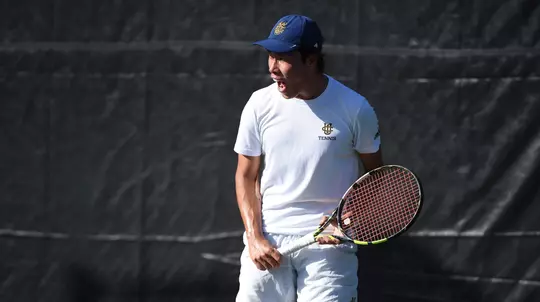
A New Chapter in Irvine
After graduating with a bachelor’s degree in economics from Arizona, Hiroki entered the transfer portal as he began to think about graduate school and a potential new home to finish his collegiate career.
One school that checked all the boxes for Hiroki was UC Irvine. It helped that he had already built a relationship with head coach Mike Saunders, who was one of the coaches who recruited Hiroki when he was a top junior player in Japan.
"I had known Coach Saunders since I was 17, I really liked the business school at UC Irvine, and I wanted to come to a bigger city,” Hiroki said of his decision. “So for the coach, the education, and the networking opportunities in Irvine and Southern California — it made a lot of sense.”
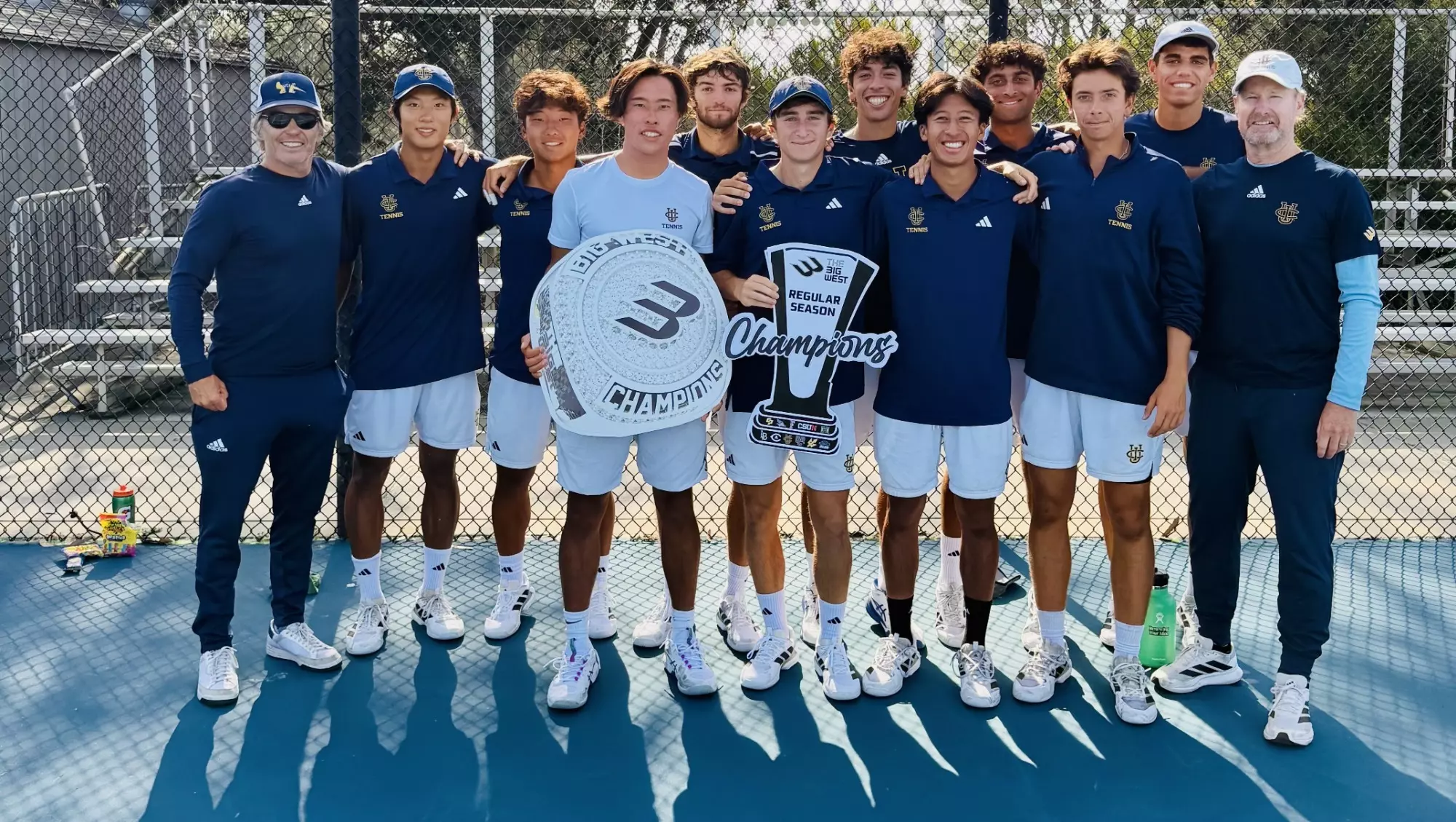
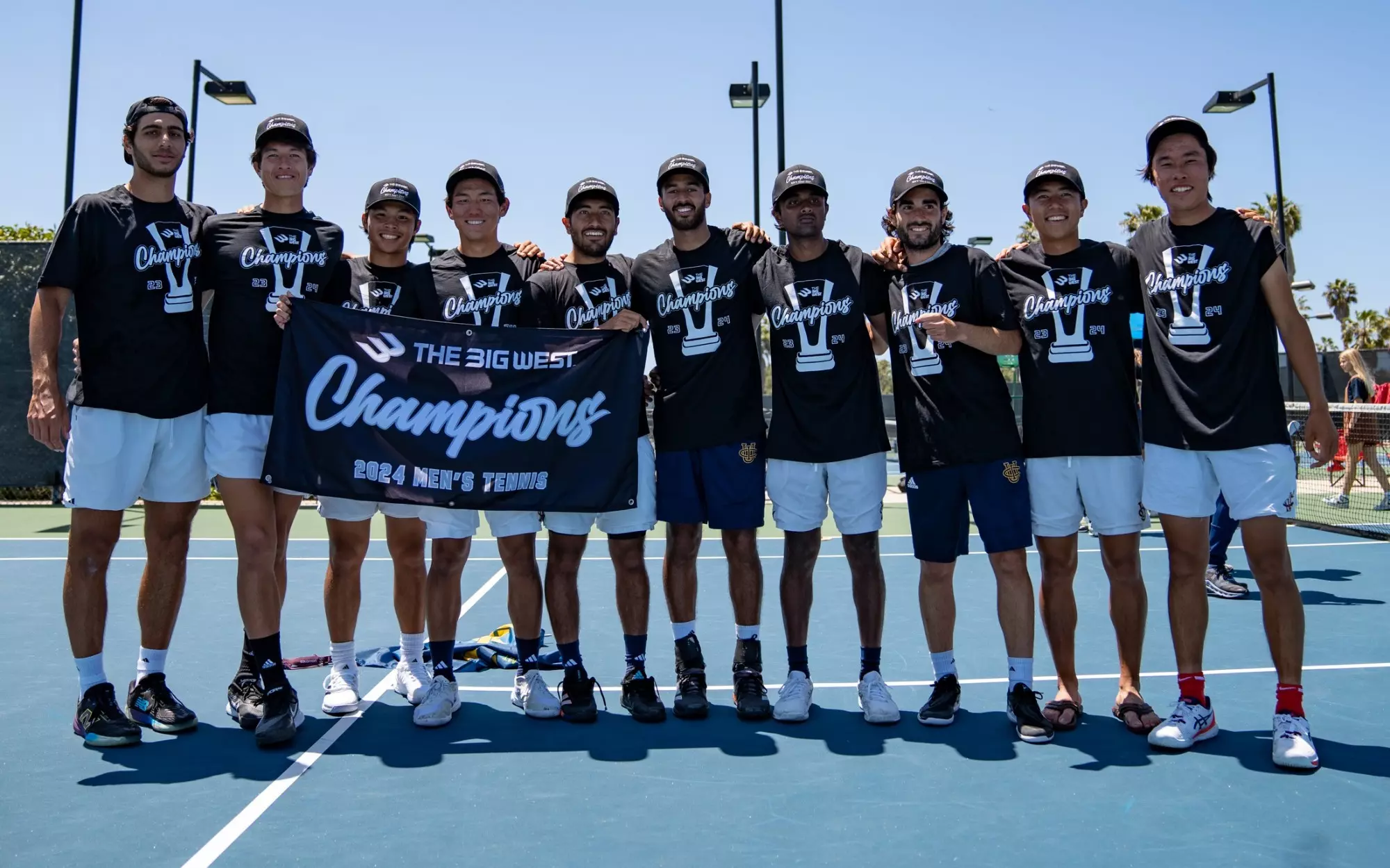
Hiroki arrived at UCI for the 2023-24 season and wasted little time making an impact. At the Big West Championships, he clinched both the Anteaters’ semifinal and final wins to secure the team title. In those matches, Hiroki beat the same players from Cal Poly and UC Santa Barbara who had defeated him just weeks earlier in the regular season.
"I lost to both of them two or three weeks before, so I was a little nervous," he said with a laugh. "But I'm glad I beat them in the tournament for the team."
Even with his success, Hiroki was quick to deflect any individual praise.
“I was just lucky I got to clinch,” Hiroki said. “There were three other guys who already won for the team, and I just happened to be the fourth one. We were super locked in, and my mentality was trying to extend the season because I wanted to play with that team as long as possible. I think the other guys were thinking the same way, so I believe that is why we won. It was a great moment for the team.”
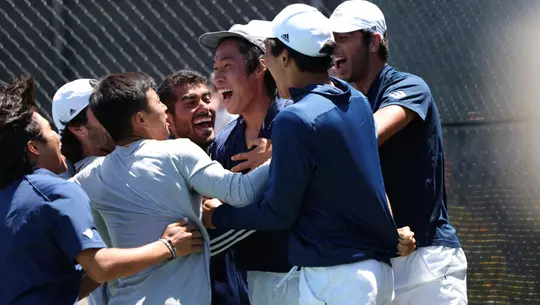
Another Test
After leading the ‘Eaters to the Big West Championship in his first year in Irvine, Hiroki returned for what was going to be his final collegiate season in 2024-25. Just as everything seemed to be falling into place, a hip injury in January ended his season and possibly his collegiate career.
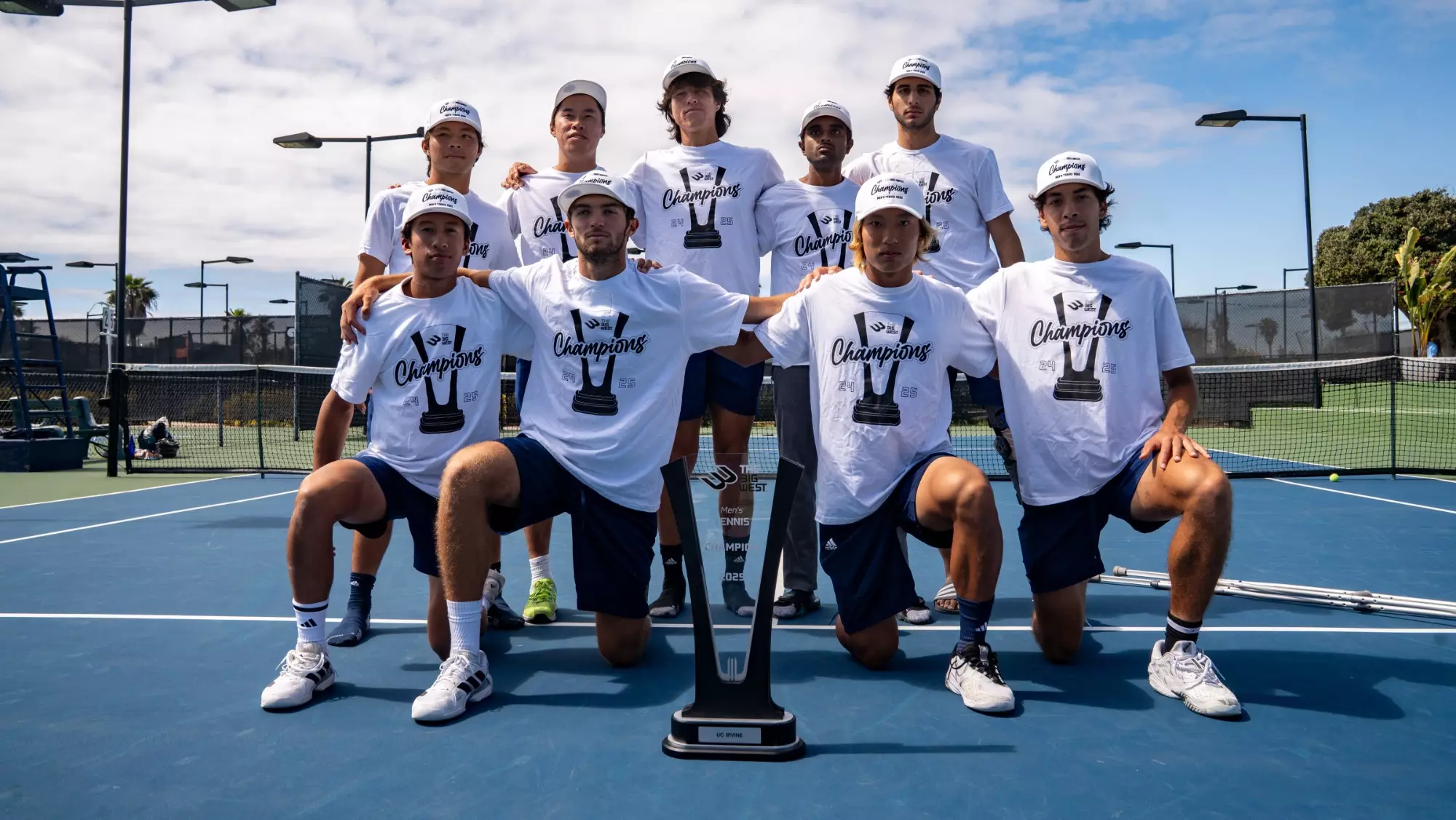
Hiroki spent the rest of the 2025 season rehabbing and mentoring his teammates as they went on to win a second consecutive Big West Championship. He returned to Japan after the spring quarter, when he completed his Master of Finance degree.
While at home, Hiroki found a doctor and physical therapist who specialized in hip injuries through a network of referrals from friends and fellow tennis players. He then committed to an intensive rehabilitation program. They decided to give it two months, and if he made progress, they would keep going; if he didn’t, then he would get surgery.
So when Coach Saunders reached out in the summer of 2025 to offer Hiroki a final year of eligibility at UCI, the graduate student was hesitant. His initial thought was that he would be too old. He also wasn’t sure if he’d even be able to play. But when he weighed the uncertainties of his original plan to go pro against the opportunity of one more collegiate season and a second master’s degree in accountancy, Hiroki decided to return.
“I decided in July to come back,” Hiroki said. “At that point I still wasn’t sure if I was going to end up needing surgery, but Coach Saunders was super positive and optimistic, and everything ended up working out so I’m really thankful he trusted me.”
Hiroki made the progress he needed to get back out on the court and saw his first competitive action in nine months at the ITA Southwest Regional Championships this past October.
“Until I played in that first tournament, I was still doubting myself," Hiroki said. “But the biggest support was from Coach Saunders. I wasn't sure if I was going to come back to college after the 2025 season. I was planning to go pro, but the injury happened and I was kind of lost. If I were a coach, I wouldn't want to recruit someone who is injured, but he believed in me and I'm really grateful for that."
Process Over Results
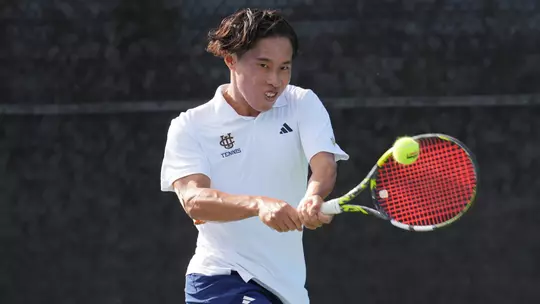
Now, in what is his final college season, Hiroki is playing the best tennis of his career. He is 13-3 (5-0 Big West) with two wins over ranked opponents at No. 1 singles, and has won a conference-leading four Big West Player of the Week awards. When asked what has contributed to his success this year, his answer says as much about his growth as a person as it does about his development as an athlete.
"After the injury, I enjoyed my time on the court even more,” he said. “Every day I'm grateful I can be on the court. My focus shifted to how much progress I can make rather than just winning or losing, and it’s probably that mindset that has helped me to get better results."
He paused, then smiled at the irony of it all.
"I'm not chasing results, but now I'm showing better results."
It's a lesson Coach Saunders and his staff have preached throughout his time at UCI — be process-driven, not result-driven. Hiroki had heard it before, but now he truly understood what it meant.
Hiroki is hoping those lessons he’s learned and the team chemistry the Anteaters have developed will lead to a third-straight Big West Championship. UC Irvine is the No. 2 seed and will open the conference tournament in the semifinals tomorrow at 1 p.m.
“I think we have that same drive to keep the season going,” Hiroki said. “We have three freshmen this year; they are super genuine and great guys. We have great chemistry, we are super close, and we play for each other. That isn’t something that is forced, it comes from the bottom of our hearts.”
As his collegiate career enters its final stretch, Hiroki knows what he will carry with him and what he will miss most.
"Our team chemistry and team culture," he said without hesitation. "That friendship and unity is something special from college tennis. The chemistry we create is probably more valuable than winning or losing matches."
Hiroki’s growth as a person and tennis player through the highs and lows of his collegiate journey is immeasurable. He has been through it all, from conference titles to injuries that put his career in jeopardy.
But in his last season — the one that almost never happened, on the court he almost never returned to — Hiroki Sakagawa is back and playing like someone who knows exactly how lucky he is to be there.