2026 Hall of Fame Class: Jim Snyder
1/27/2026
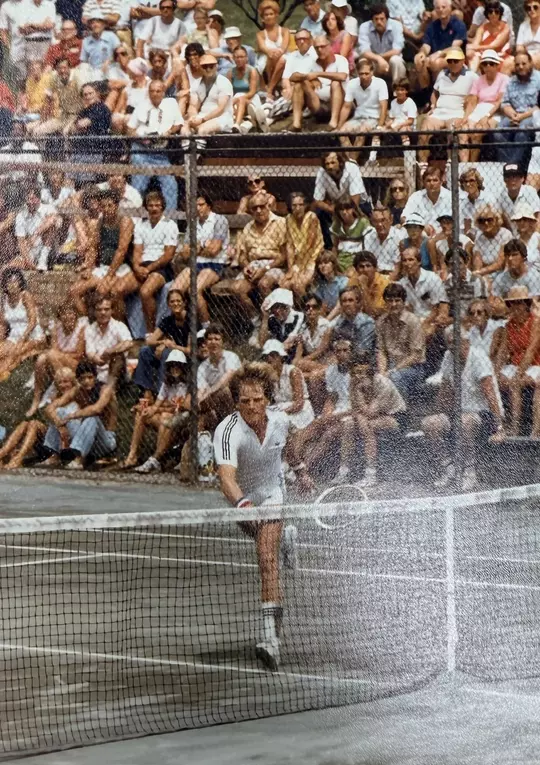
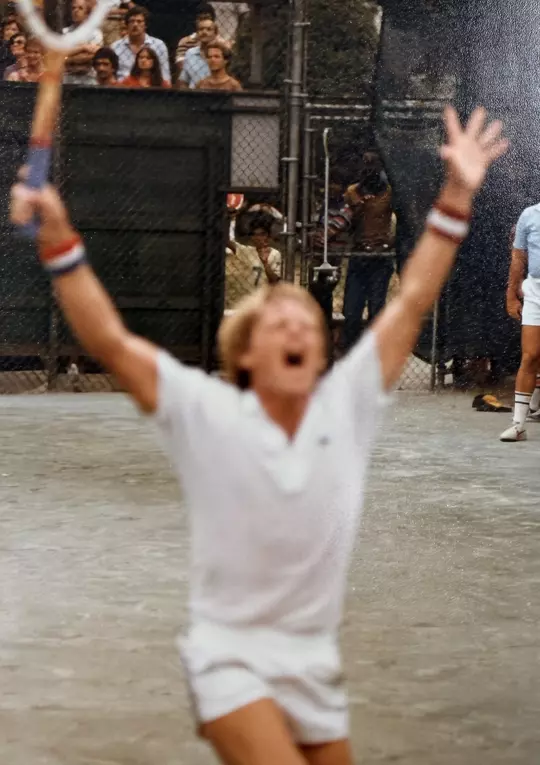
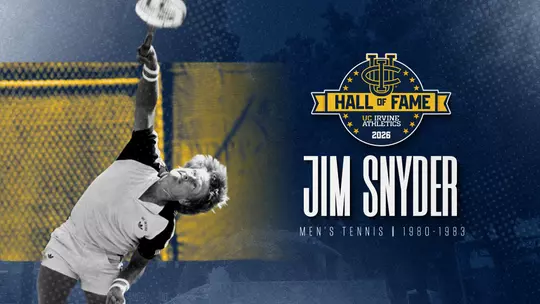
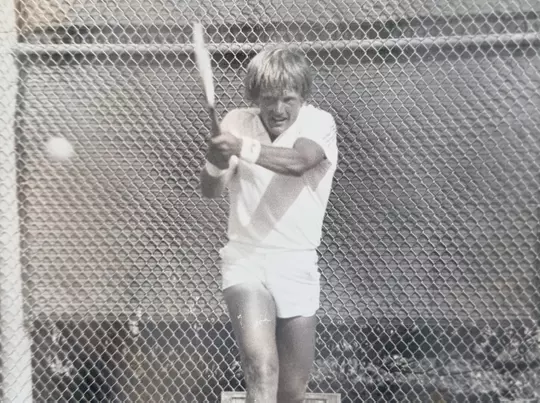
Jim Snyder laid a foundation of success for the UC Irvine men’s tennis team’s NCAA Division I era. Snyder joined the Anteaters in 1980, which was their third year at the DI level. He missed that season due to an illness, but made an immediate impact the following year, earning the No. 1 singles spot and being named UCI’s first Big West Men’s Tennis Player of the Year. Snyder went on to win the award again in 1982 and 1983, making him the program’s only three-time Big West Player of the Year. He is also one of two players in the conference’s history to accomplish the feat.
From 1981-83, Snyder claimed three-straight Big West individual singles and doubles titles at the No. 1 spot. In doubles, he won his first championship with Jim Slaught, before teaming up with Eric Quade for the next two years. As a junior, Snyder continued to set the bar even higher when he became the first ‘Eater to qualify for the NCAA Division I tournament in singles. He would head back to the national stage in singles, doubles, and as part of UCI's first NCAA Division I team appearance as a senior.
In his singles career, Snyder compiled a 132-53 record. He is still UC Irvine’s all-time singles wins leader, while he ranks sixth in doubles with 84 victories.
Snyder will now cement his legacy as the seventh men’s tennis alum to be inducted into the UC Irvine Athletics Hall of Fame.
We sat down with Snyder for a Q&A spotlighting his remarkable career ahead of the 2026 Hall of Fame Ceremony on Feb. 13.
How did you get started playing tennis?
I was a freshman in high school at Mater Dei playing football, and you can imagine size-wise, it wasn’t a good fit. After football season, a friend and I decided to hit some tennis balls at a public park and I loved it. Mater Dei didn’t have a tennis program, so at the end of my freshman year, I switched to Estancia High School in Costa Mesa in order to participate in tennis, and that was it. From a USTA sectional standpoint, I didn’t start until my second year of the 16s, which is very late. While most of my competitors had played 12s and 14s, I was just getting started, getting my technique and game going, but it was okay because by playing other sports it rounded me out athletically.
Why did you choose UC Irvine?
It was interesting, in my second year of 18s, I was finally moving up the ranks in the Southern California section with a number 20 ranking which was good enough to be invited to the state championship in Northern California. At state, I ended up making the finals of the tournament. In theory, this moved me into the top ranks in the state and was awarded an invite to the national hardcourt tournament in Burlingame, California. Now I’m playing with national-level players who were all going to D1 schools. I beat Michael Leach, who had committed to Michigan and, as a note, ended up winning the NCAA singles tournament in 1982 as the only unseeded player ever to do so. That win kind of catapulted me, and the USTA invited me to participate in the national Midwest tournament in Springfield, Ohio. I lost to a very good player in the first round, but ended up winning the consolation draw. In my mind, I rationalized that I was in the middle of the pack with these national-level players. I had been recruited by a few universities on the heels of the success that summer, but I wanted to stay local. My girlfriend, now my wife, was local and it’s where my support structure was so I had planned to go to Orange Coast College. I already had my books and classes; I was ready to go. Then Coach (Myron) McNamara called and said, “hey, we’d like to bring you over to UC Irvine if that’s possible.” I already had a few friends who were a year older going to OCC, but made a very smart decision if you will because I looked at it and UCI had a better educational structure, and they were moving into a Division I program. I still could have gone to OCC and developed, but I would have lost that opportunity to play against the best players at every school around the country. So I got into UCI and promptly started to work out with the team, got some challenge matches under my belt, then got mono and was unable to play so I redshirted my first year. My first playing season was with Coach Greg Patton who had arrived at the school and was our new coach. I was able win the No. 1 position on the team which lifted my game. It did not matter what school we played against as the No. 1 player was always good, so I had my work cut out for me day after day, and I loved it.
What were some of the most memorable moments of your college days?
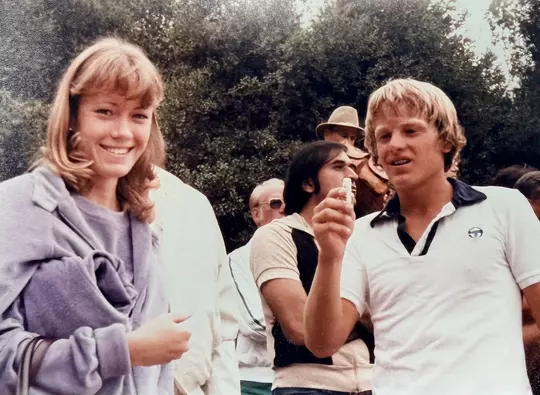
My sophomore year, I won my first league title in singles, won the doubles title with Jim Slaught, and we also won as a team. If my memory serves me right, the last doubles match with Jim and I, we ended up beating Long Beach and I think that capped the league win for the team, so that was very memorable. My second league singles title was memorable too because earlier in the season when I was playing against Larry Barnett from Santa Barbara, who was really a good player and we had a very tough rivalry going, I dove for a volley and broke my thumb under my racket so I was out for 6-8 weeks while the season was going on. I was training while I had my cast on, and when I came back, I was probably better fit than before I broke my thumb. I ended up beating Larry and winning the singles title. Eric Quade and I also won the league doubles title that year, and I won with Eric in Ojai.
Getting to the national tournament my junior year was also big. I always remember that tournament because when I arrived I wasn’t sure if I “belonged” so to speak. As it turned out, I ended up beating the No. 16 player in the country, Roberto Saad, which was a big win. Then the next round, I had the No. 1 player from UCLA, and I believe the No. 1 or 2 seed in the tournament, down a set, but I could not put him away. It was a lot of pressure and couldn’t hold it together, but learned a lot and felt like I could play with anyone at that point.
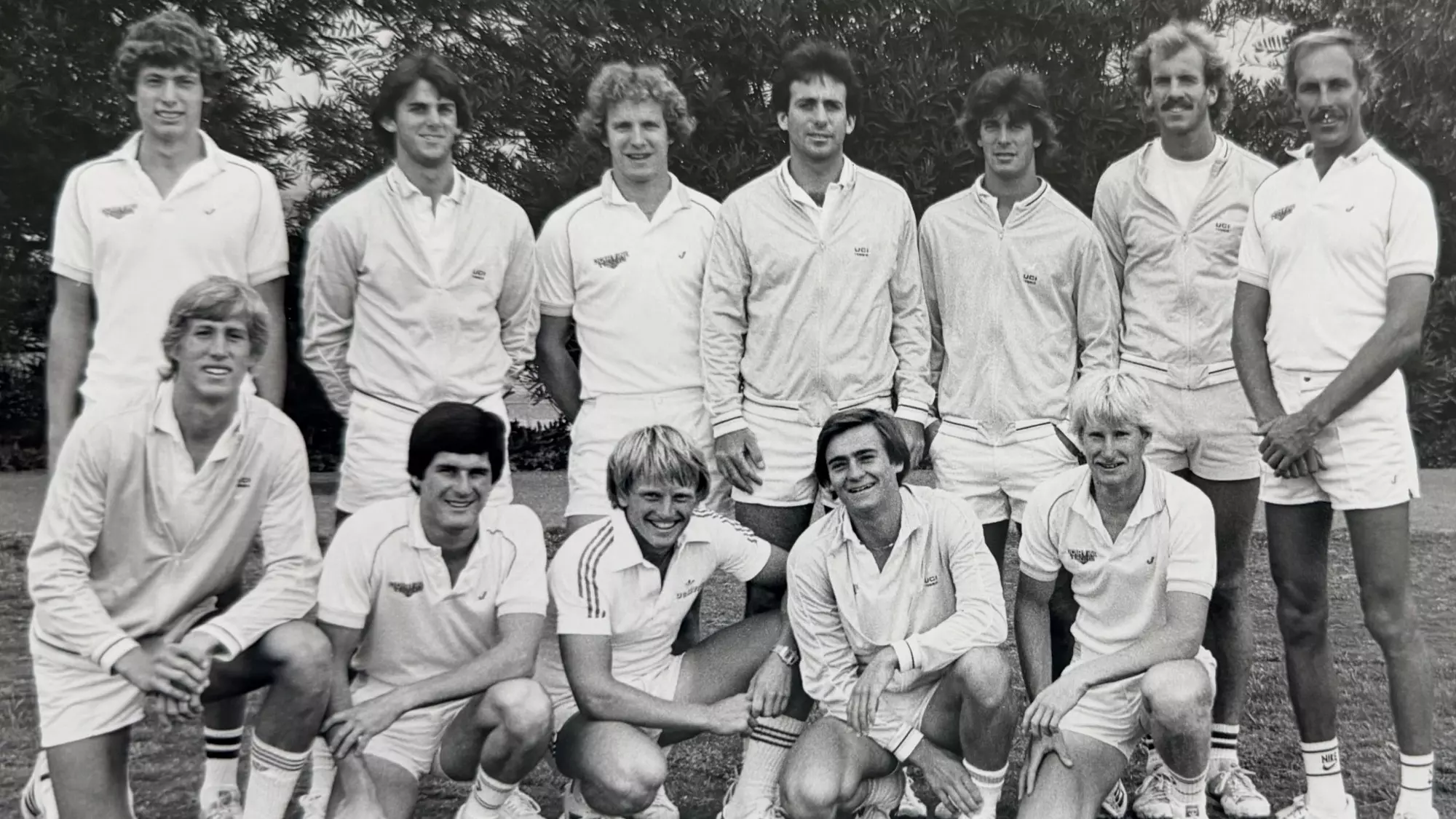
Then in my senior year, with Coach recruiting Bruce Man Son Hing and Steve Aniston, beating SMU, the No. 1 team in the country was incredible. This pushed UCI into the top 10 nationally and gave us a national team invite to cap a great year. That was very much a result of Coach Patton getting our team physically and mentally ready to win.
What are some of the most important things you learned while at UCI?
I learned a lot about myself. On the court, I learned tenacity, patience, and aggressiveness, but the bottom line is I learned how to win. Then off the court, I really got to appreciate the foundation of support and relationships that are so vital, and that’s why I think UCI was such a good choice. If I were talking to young people, I would say that’s an amazing part of athletics that is not talked about a lot. Those relationships you build are fantastic – with your teammates, in the community, and with the people that are supporting you. It ended up leading me into my next career as well. I am very appreciative of the foundational support from the school, my wife and teammates, my family and my wife’s family, friends, acquaintances, and people that were just interested in tennis locally. It’s an amazing deal, and I met so many people after playing who knew me from the sport and it really helped develop relationships in the community.
What was the UCI men’s tennis team culture like during your playing days?
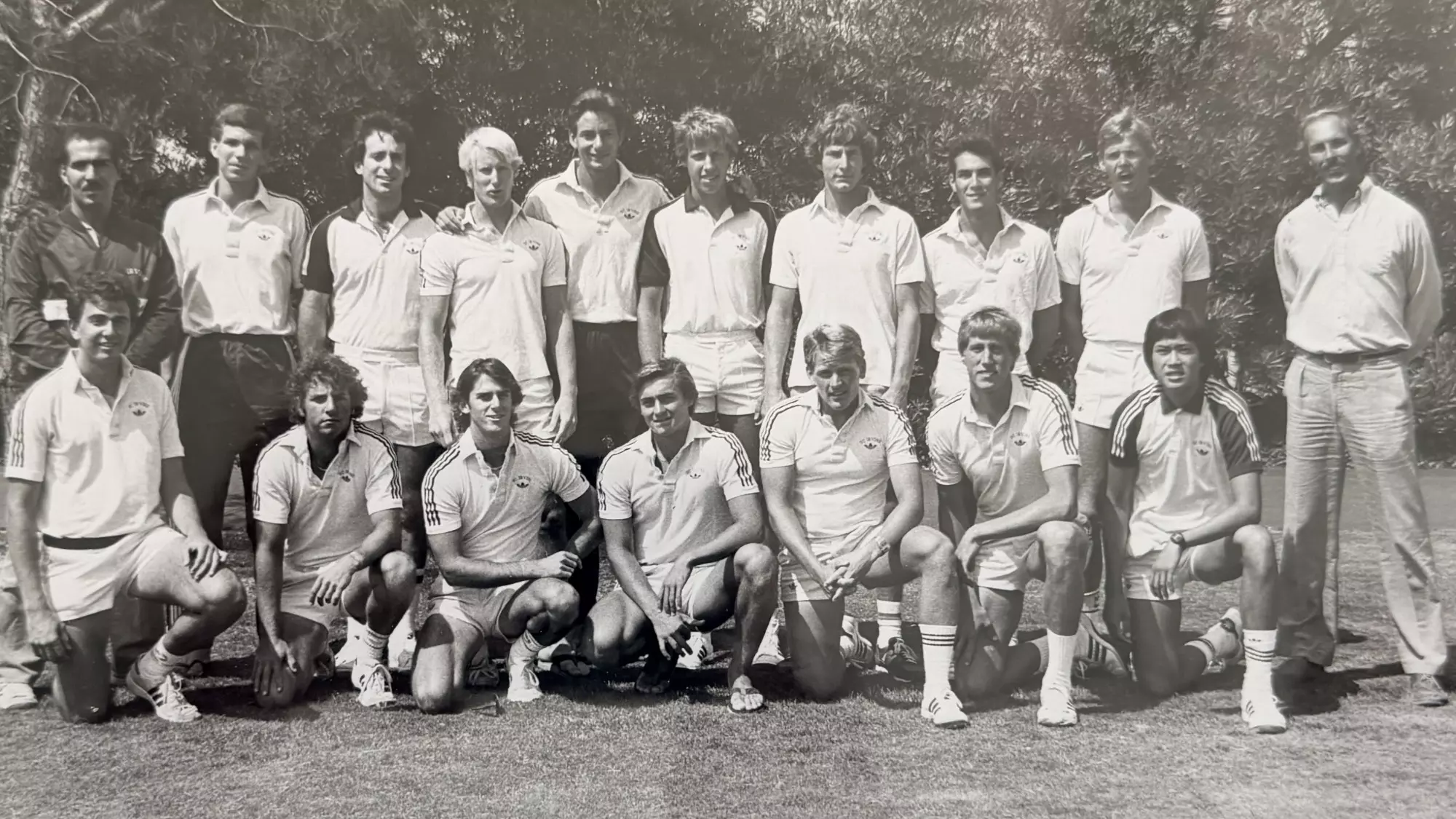
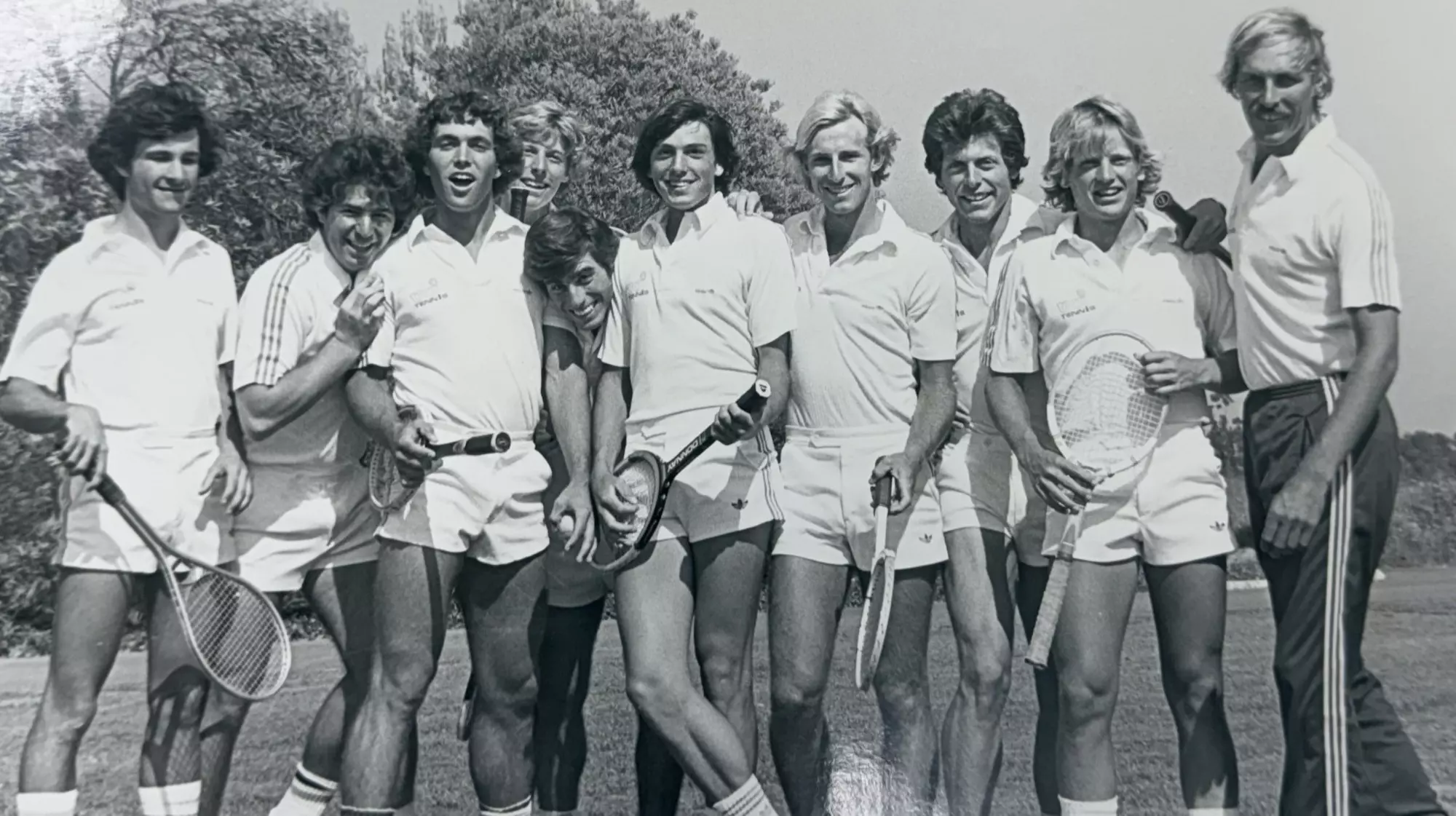
It was so fun and was really a magnificent time. I attribute a lot of that to Coach Patton. He came in and didn’t have the reputation that the UCLA or Stanford coaches had. They were the well-known coaches who were recruiting the big superstars. Then here comes Greg, in his twenties, and he is working. I mean, he never stopped working. He was getting us to every tournament. He was making sure that on weekends he was going out to junior tournaments to recruit, and so foundationally, he set the bar of energy, confidence, and motivation. That’s number one. Number two is we did move into Division 1, so my first year, we had some guys from the prior team who were scrappy like we were. We couldn’t pick off any of the big teams yet because we didn’t have the depth at that point, but we were learning a lot. My sophomore year, my game was starting to come together, and I was starting to compete in every match, and we started to beat some good teams. That is the first year we won league, so we established ourselves as the best PCAA (Big West) team. Then my third year, Coach Patton recruited Eric Quade, who came from Fullerton College. He came in as the quickest, most aggressive player I’d ever seen, and he just elevated the team with his game style. He also became our captain and was just a fantastic guy. He kind of stabilized the team, gave us a lot more confidence and really pushed everyone along because he played at a different speed than we were used to. Then my senior year, Coach recruited Bruce Man Son Hing and Steve Aniston, who were big-time junior players. I think they were in the top-10 nationally, and were so talented, and that gave us the depth throughout the six-man lineup. Coach knew he had a team now because his swagger elevated!
What did it mean to you to be the first Anteater to qualify for the NCAA Division I tournament?
It was really a meaningful accomplishment. My focus in college was tennis, and it was not only an honor to represent the school but an honor for the NCAA to say you belong here. It really meant the world to me, and to go there and do well was another good feeling. My junior year I was playing probably my best tennis. It was great too with Coach because we had a lot of fun. That first NCAA tournament, it was just him and me, so we had a great time and got to know each other even better.
What was it like going back to NCAAs the next year with the team?
That was so fantastic. Eric and I got to play in the singles and doubles draw, and with the team. It was senior year and none of us really knew what we were going to do with tennis after school, but here we are at the national level playing as a team, and like I said the depth and the good guys, everybody on the team was honestly such fun, aggressive, positive, confident competitors. We just loved going back there and participating.
What was your career path after graduation?
I got married the summer after I graduated. I had participated in various satellite tournaments in the summers during college and had moderate results. My wife and I decided to go to Germany to really assess how we felt about the prospect and the future of my tennis career. Professional tennis is interesting given there’s no team, no crowd, and my first match I was playing indoor on carpet at 2 a.m. The last tournament of that series, I ended up beating the 13th-ranked player in Germany but got a glimpse of Boris Becker. When we watched him play, you just knew he would be a superstar. He was bigger, faster, better which equals money; smaller, slower, and not as good means no money. So it was an easy decision for us. Watching him really helped solidify the decision because everyone is good, but you start seeing the superstars elevate from the group.
We came back home and I was the head pro at Anaheim Hills Tennis Center, but I didn’t want to do that, so one day a good friend of mine, Dr. Blume, and I were hitting around and he got a phone call from one of his friends. After he hung up, he told me who it was and that his friend was going over to Hawaii to celebrate a real estate deal closing. So I asked him about that, and he told me he thought I’d be perfect for real estate. From that conversation I started to interview with various companies up in L.A., and one of the gentlemen I interviewed with knew Bill Lee, who had started Lee and Associates in Orange County. He called Bill and told him there’s this kid interviewing in L.A., but it’s probably not the right area for him. So then Bill, who had followed tennis and UCI sports, calls me in to talk and I was hired. I was with Lee and Associates for the majority of my career until about five years ago when we formed Tidemark Real Estate.
Describe the feeling when you were told you were going to be inducted into the UCI Athletics Hall of Fame and what that means to you?
That was amazing. When you put your heart, soul, and body toward something and really commit to it, then to be honored in that way, it’s fantastic and really exhilarating. It’s a very similar feeling to winning a tennis match - a feeling of great accomplishment. When I found out about the award, it was just so satisfying and I’m so grateful to UC Irvine for the opportunity. The experience helped me – athletically, educationally, influence in the community and so on - and it’s just magnificent to be part of that. I believe we were able to lay a nice foundation for the tennis program and had an absolute blast being part of the team.